At this one-of-a-kind festival, crimson banners rise almost 20 meters above the crowd. Below them, teams of people work together to carry the enormous wooden frames through the shrine grounds and fields. Then comes the moment that makes you hold your breath: a banner tilts until its tip is almost touching the ground.
This is the Okuma Kabuto Matsuri in Noto.
The spectacle is extraordinary. But behind every banner are people who have gathered to keep a tradition going. Once you start thinking about what it takes to bring them all together, the festival becomes much more than something beautiful to photograph.
I visited Noto in September 2026, joining a tour that introduced us to its festival, its communities and its ongoing recovery. I wanted to share this part of Japan with people who love the countryside and traditional culture, and who want to understand the places they visit a little more deeply.
Because choosing where we travel can also be a way of choosing what we support.
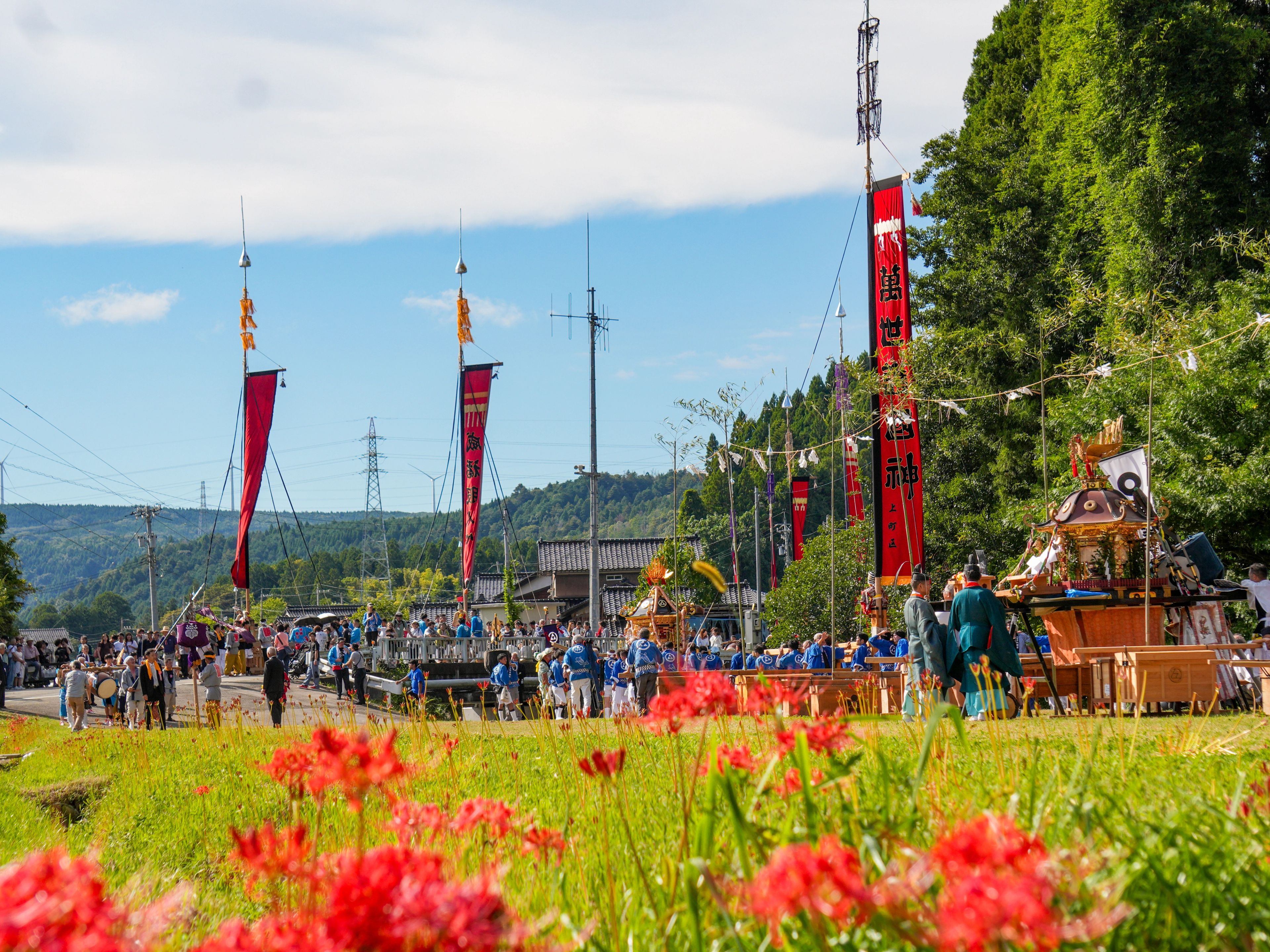
Okumakabuto Matsuri
Where is Noto, and what happened here?
The Noto Peninsula stretches into the Sea of Japan from Ishikawa Prefecture, north of Kanazawa. It is a region of coastal communities, farmland, local food and traditions that have been passed down through generations.
If you enjoy exploring beyond Japan’s major cities, there is so much here to be curious about. The landscape is beautiful, but the relationship between the land, the sea and the people living here is what gives Noto its character.
On 1 January 2024, a magnitude-7.6 earthquake struck the region. Homes and businesses were damaged or destroyed, roads and essential services were disrupted, and many residents had to leave their communities. Severe rainfall and flooding in September that year brought further devastation to parts of northern Noto.
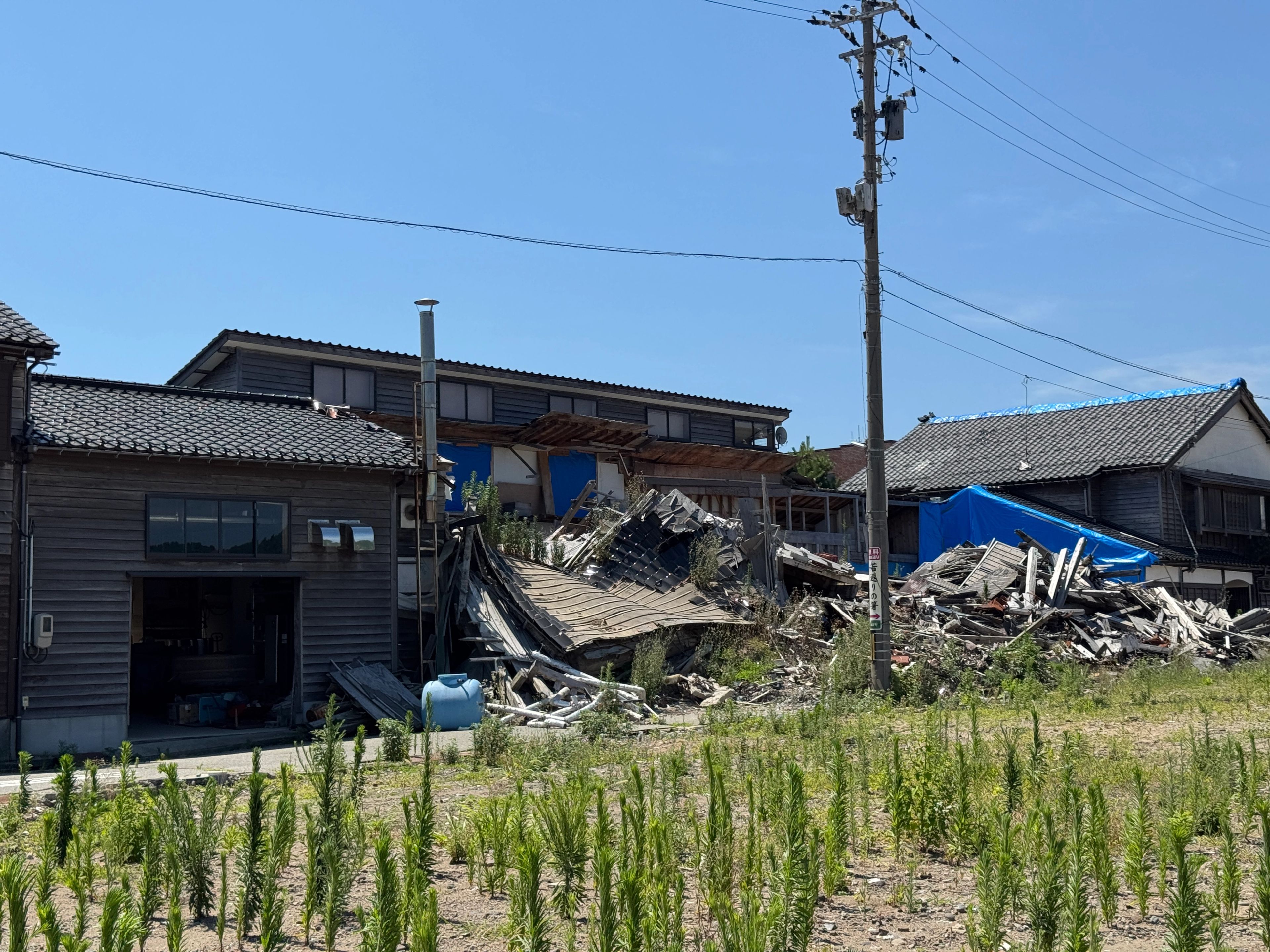
Wajima area
The disasters hit a region already facing an ageing and shrinking population. Rebuilding therefore involves more than repairing what was damaged. There is also the difficult work of sustaining livelihoods and helping communities remain places where people can live, work and gather.
That matters for culture, too. A festival needs people to organise it, prepare its equipment, play its music and teach the next generation. Traditions depend on those ordinary commitments, repeated year after year.
For me, that is an important part of understanding Noto’s recovery: the future of its communities and the future of its culture are closely connected.
Okuma Kabuto Matsuri: a tradition carried together
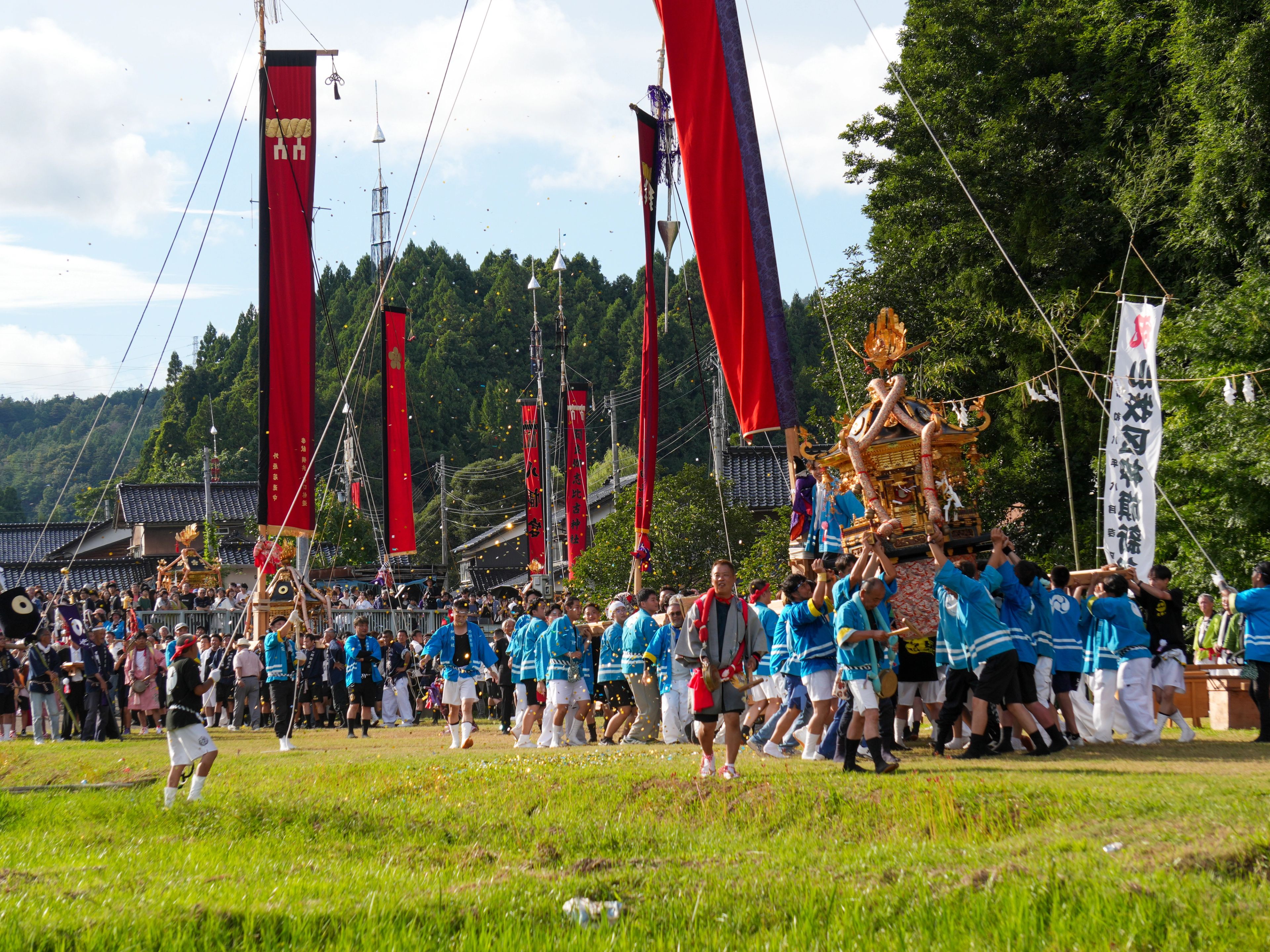
Held every year on 20 September in Nakajima, Nanao City, the Okuma Kabuto Matsuri is the annual festival of Kumakabuto Arakashihiko Shrine. Its banner ritual is nationally designated as an Important Intangible Folk Cultural Property.
The towering crimson banners are called wakubata. Processions include mikoshi, or portable shrines, and are led by the deity Sarutahiko, played by a performer wearing a distinctive mask. Gongs and drums accompany the proceedings. One of the most striking moments is Shimada Kuzushi, when the teams lower the enormous banners until they hover just above the ground.
It is an impressive display of strength, but it also takes coordination and trust. Watching it, you can appreciate how much people need to rely on one another.
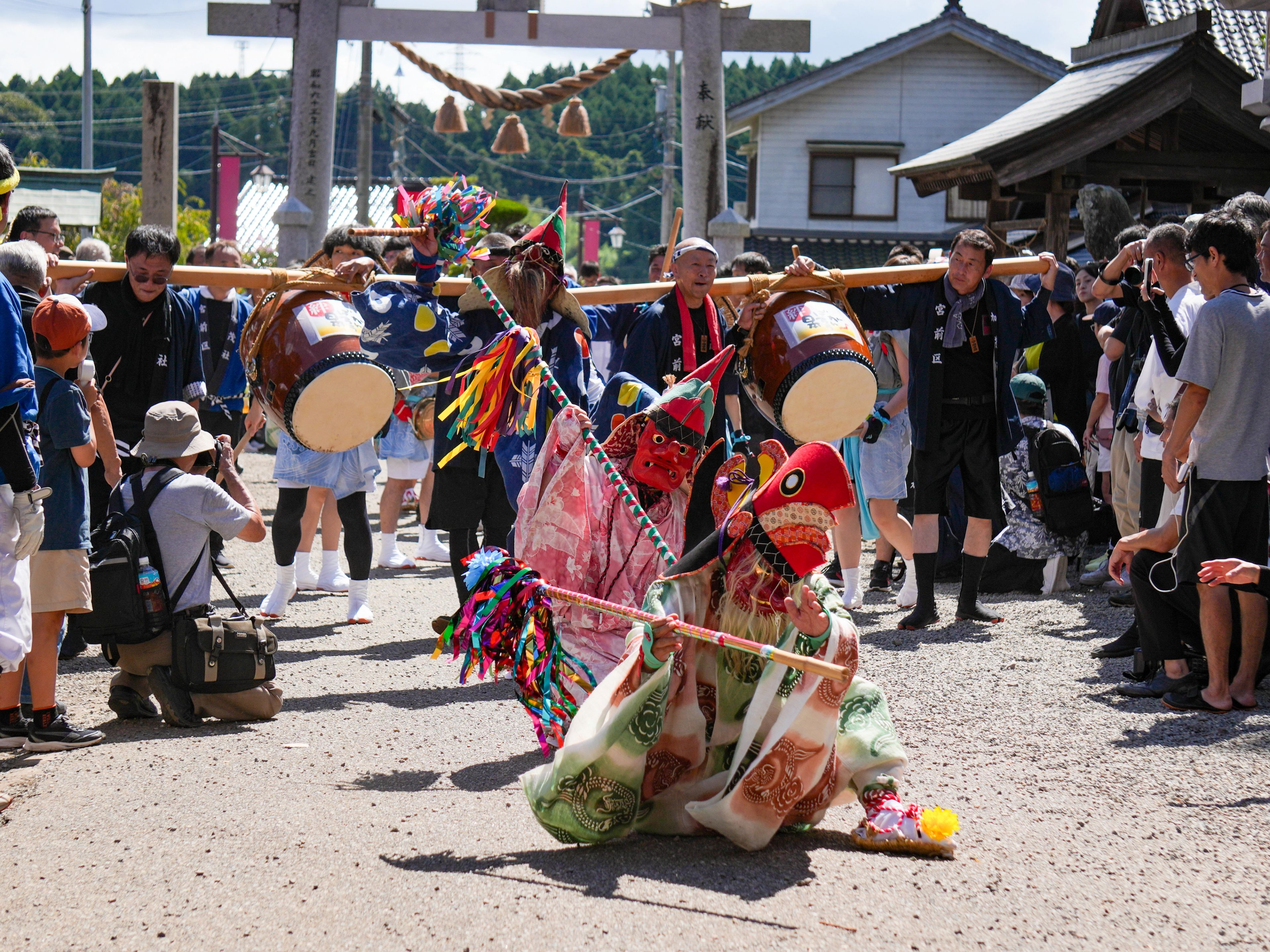
Sarutahiko leading the procession
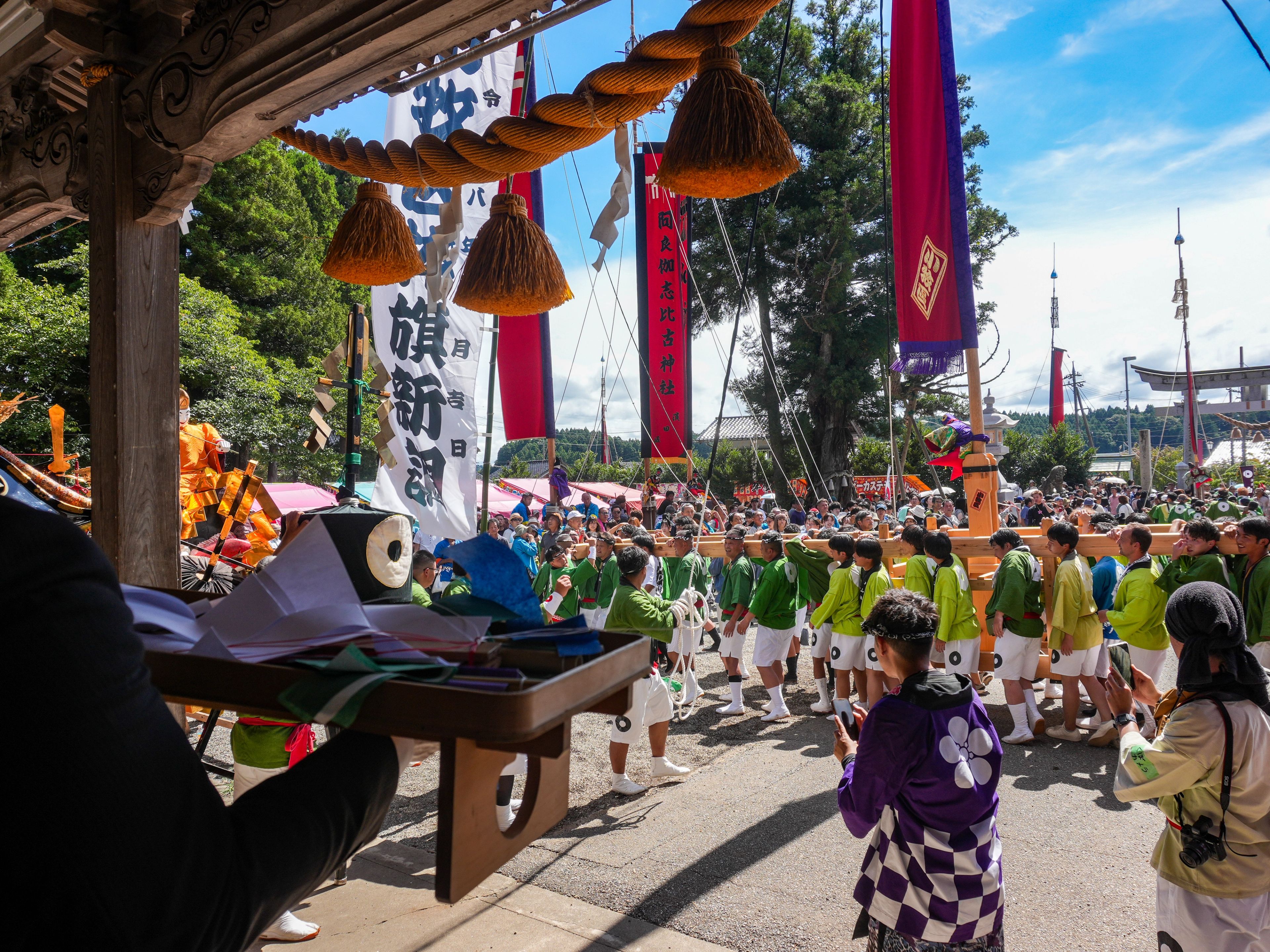
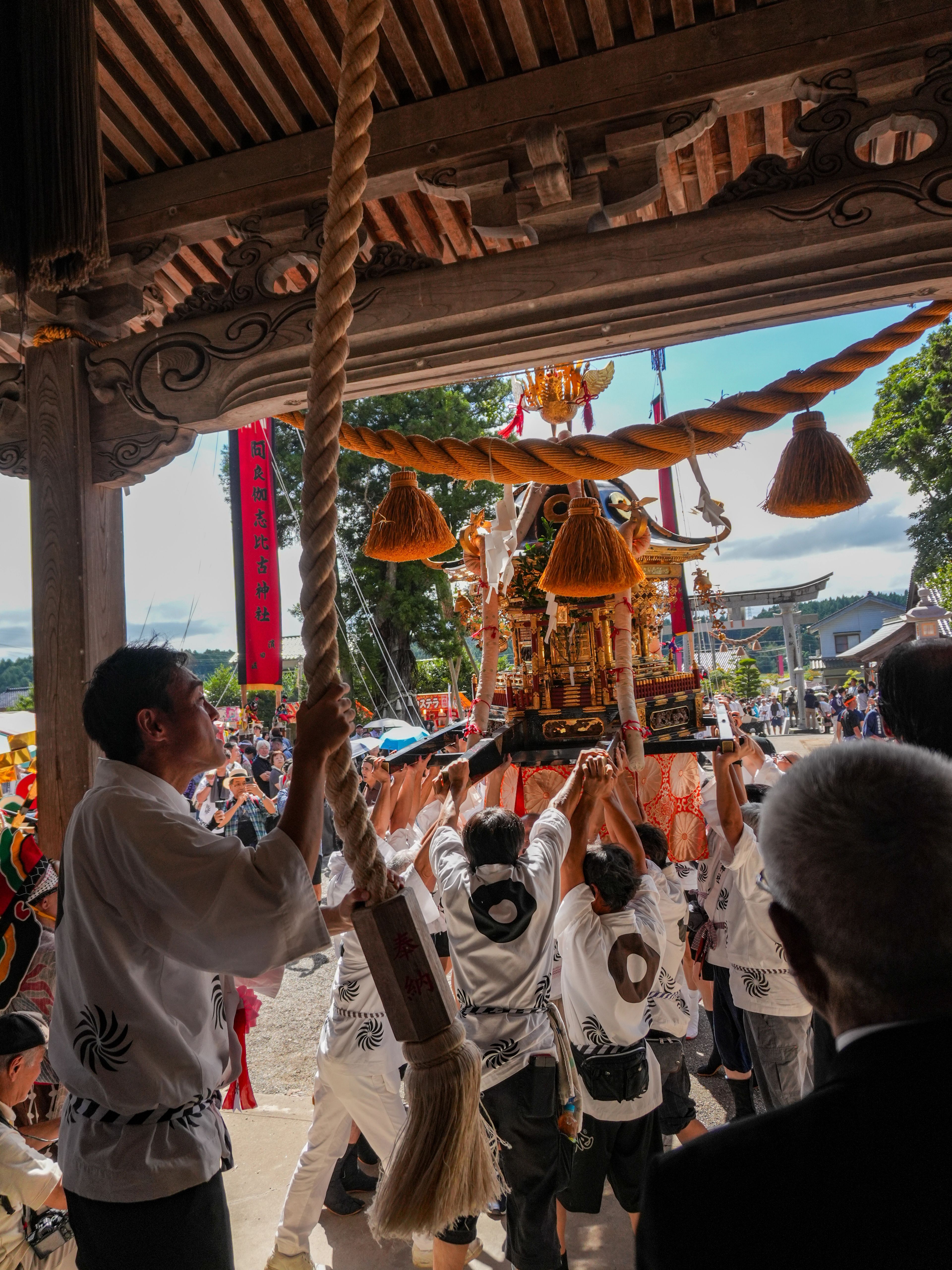
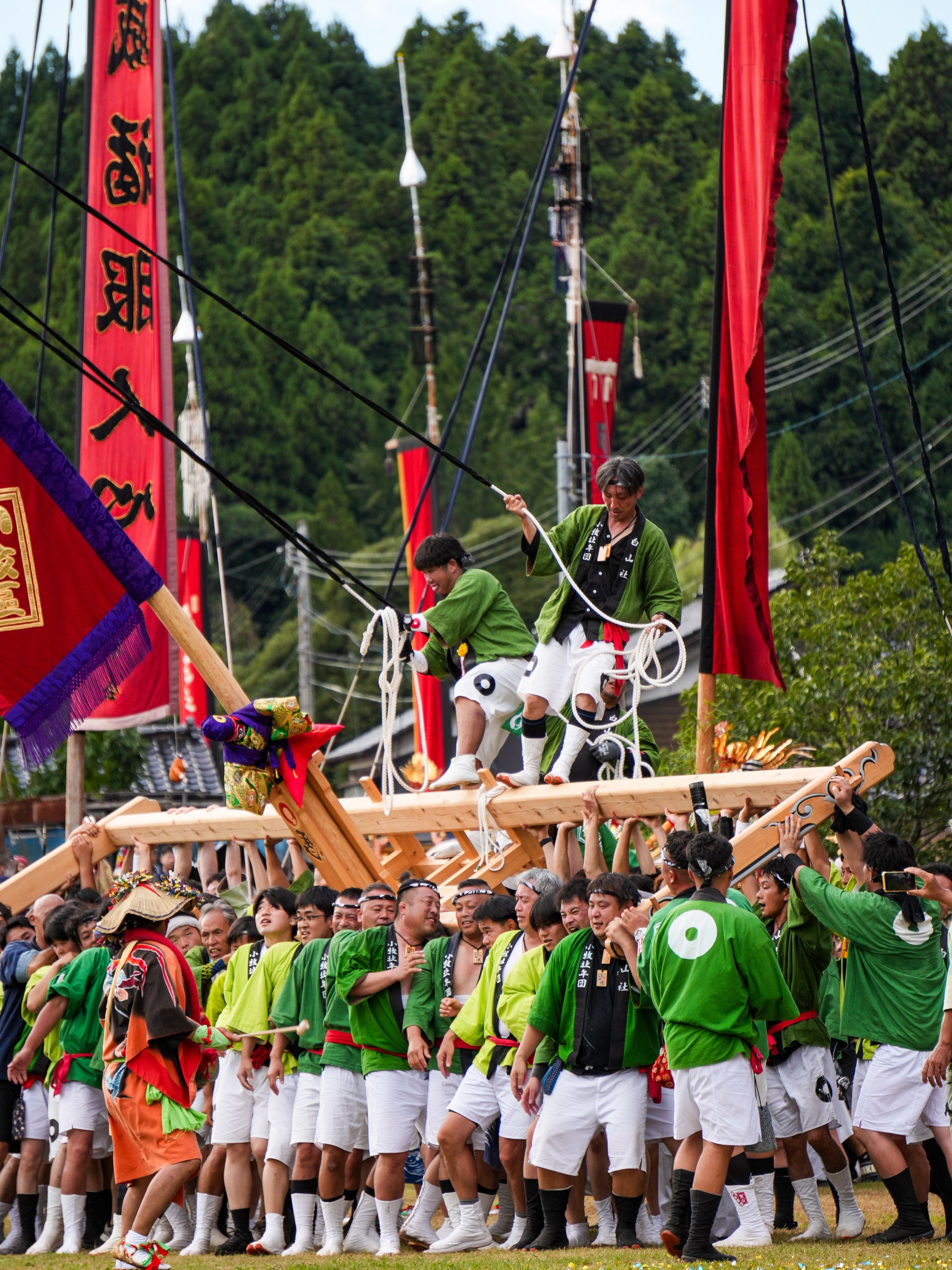
Traditionally, the festival brings together 19 subsidiary shrines. For the 2026 festival I attended, only 15 participated.
That difference is worth acknowledging without reducing the celebration to a story of loss. The people who came together made the festival happen. Their work deserves attention in its own right.
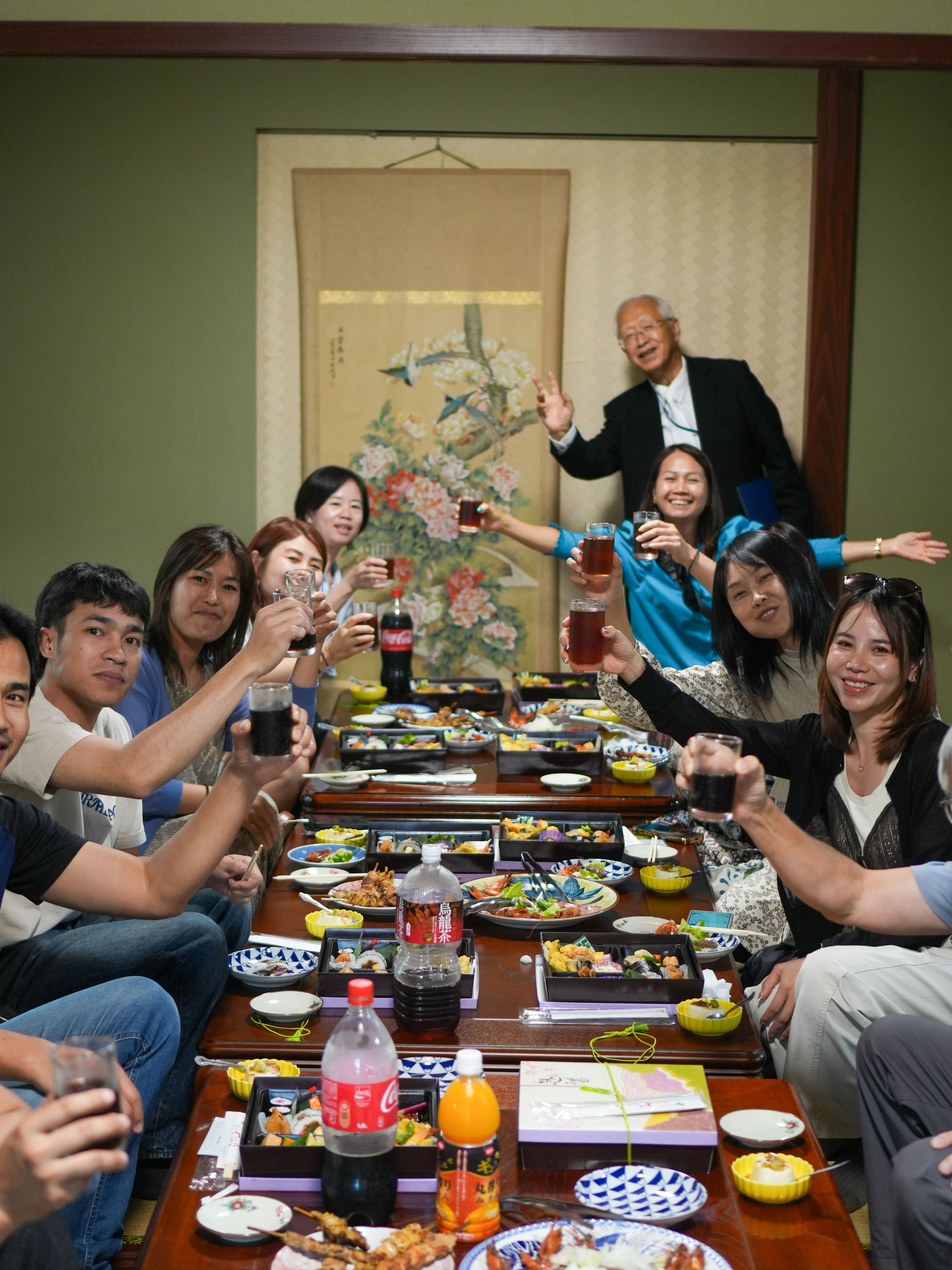
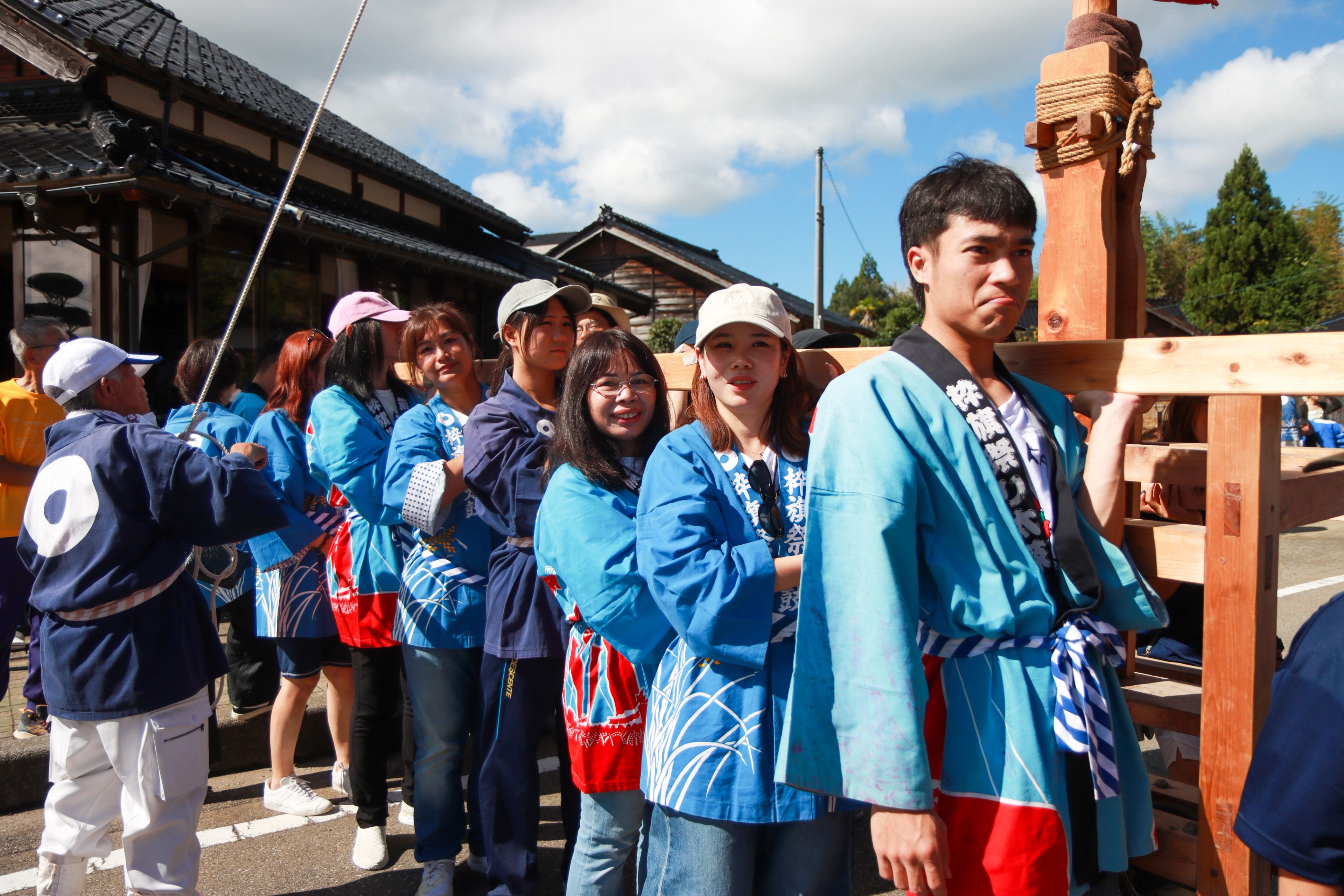
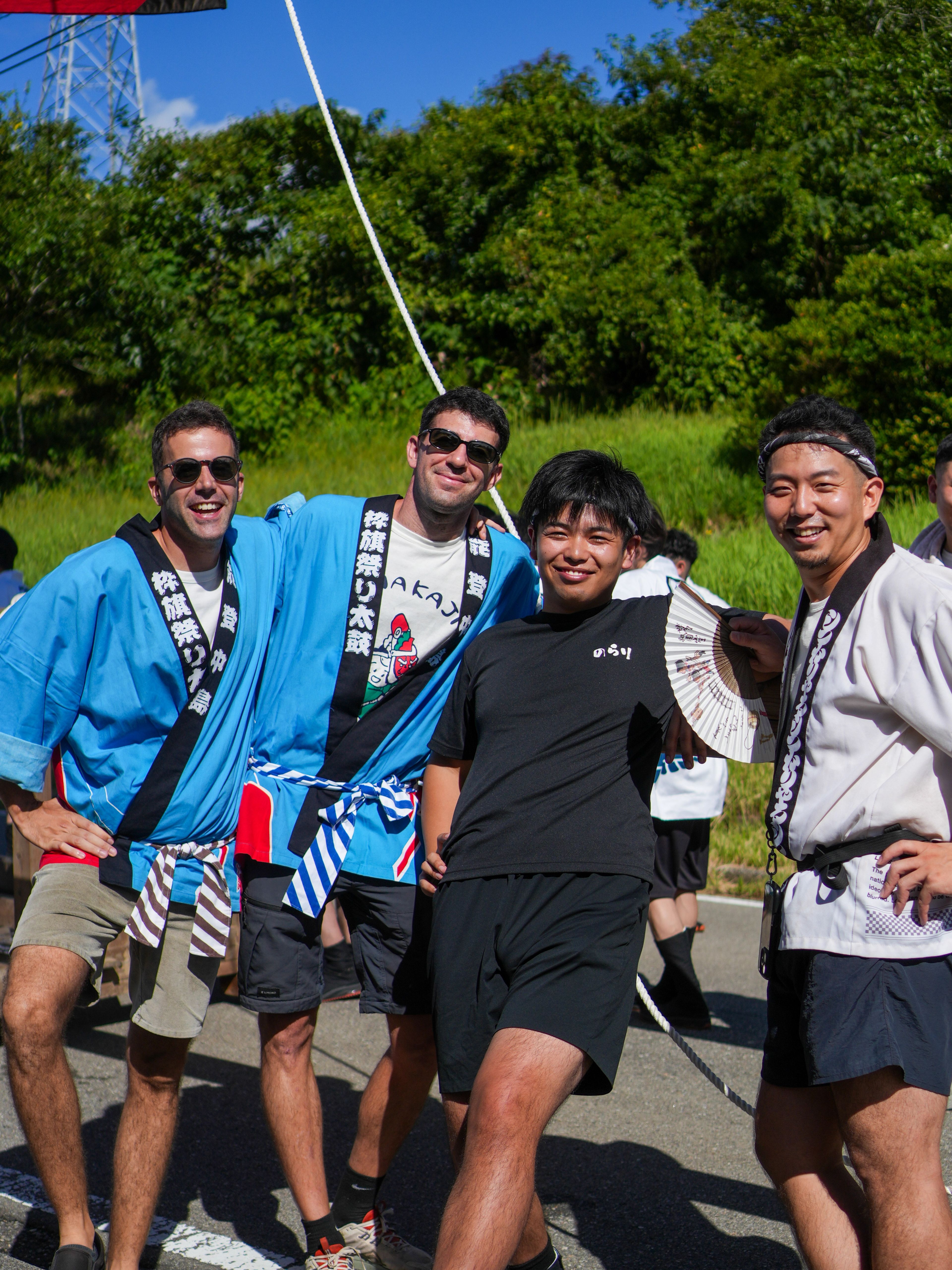
Our September tour also offered an opportunity for visitors to participate alongside the community, rather than only watch from the sidelines. We were all given festival happi (traditional festival jackets) on the morning of the festival. Kumano Shrine was hosting us, so we joined its procession. There was a smaller flag for both women and men to carry, and those up for the task could join in on the 20-meter-tall banner.
That is the part I would encourage anyone interested in a participation tour to look into. With an invitation and guidance from the organisers, travel can create a chance to learn through doing, and to understand the effort behind a tradition we might otherwise only admire from a distance.
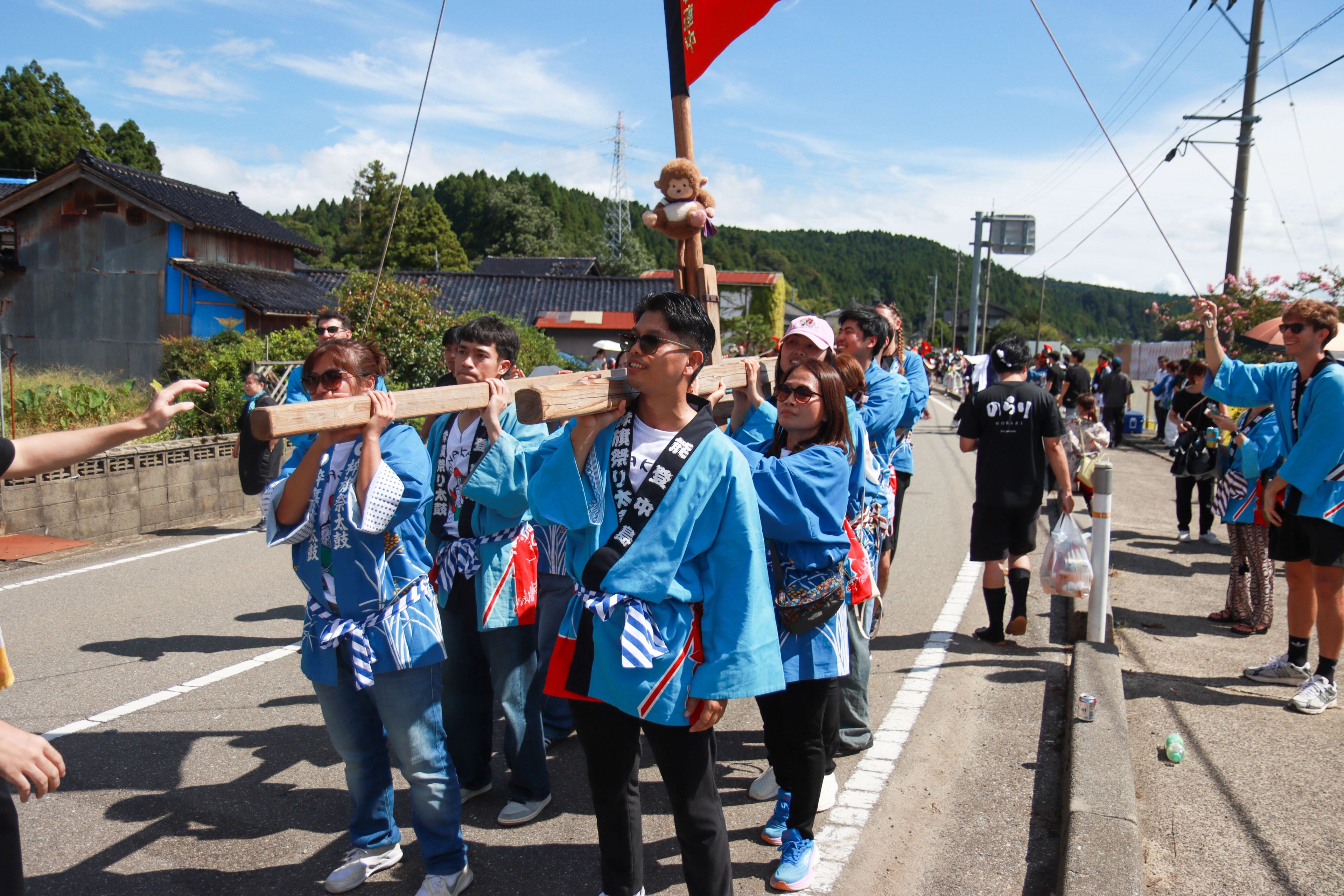
Tour participants carrying a flag at the matsuri
Exploring Noto while it rebuilds
An understandable question is whether visitors should come while recovery is still underway.
The answer depends on where you go and whether that place is ready to welcome you. Across Noto, businesses and tourism facilities have been reopening, while other places continue to face restrictions or repairs. Planning around current local information is part of being a considerate visitor.
My September trip included Najimi Ichiba, Wajima, the Senmaida rice terraces and Wakura. Together, these stops offer a way to introduce readers to different sides of Noto, from its landscape to the people working within its communities.
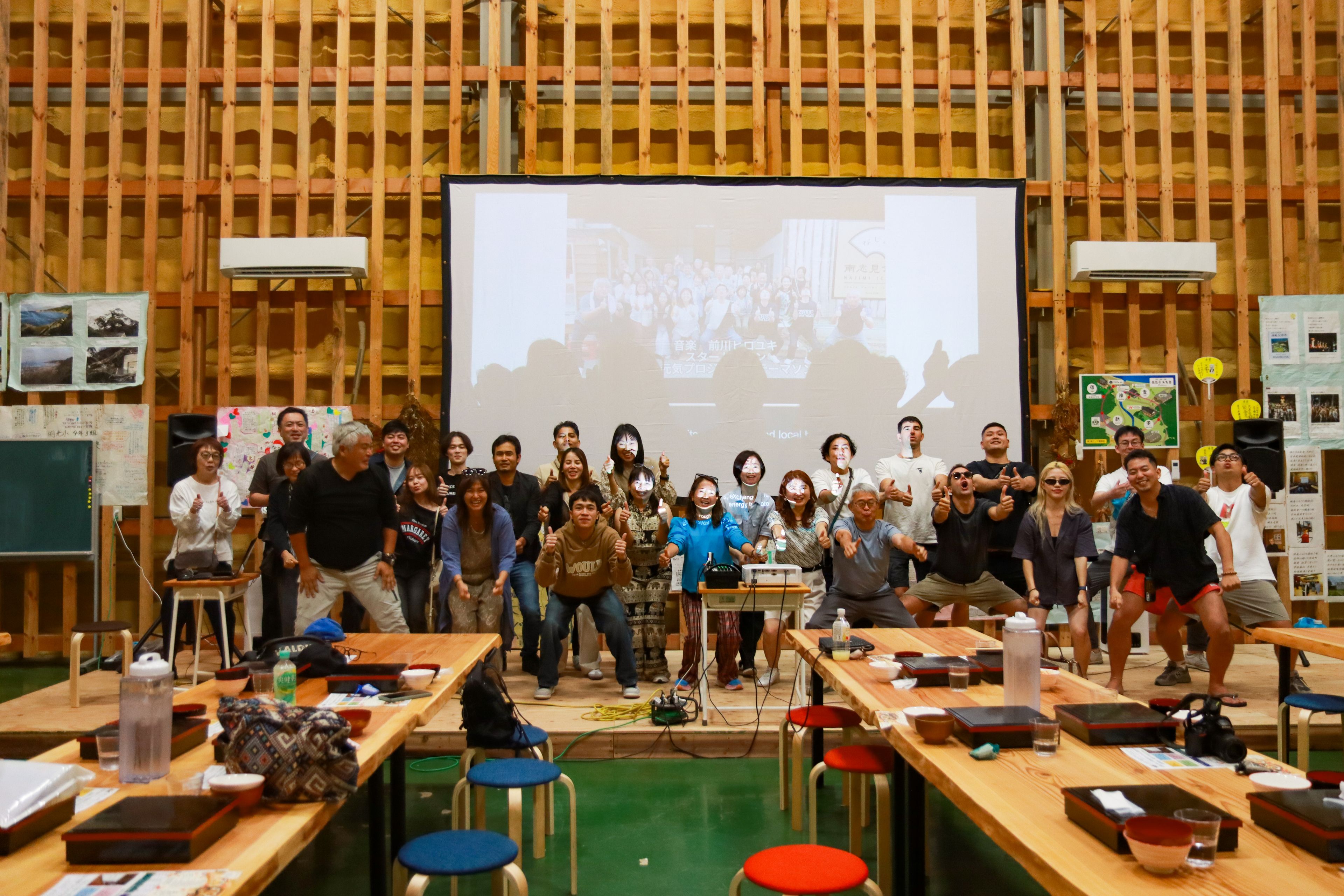
At Najimi Ichiba, we stopped at a local hub to learn more about the area. A presentation explained the devastation of the earthquake, and what locals are doing to rebuild. It is a cautionary tale and a learning opportunity for other countries that also face earthquakes.
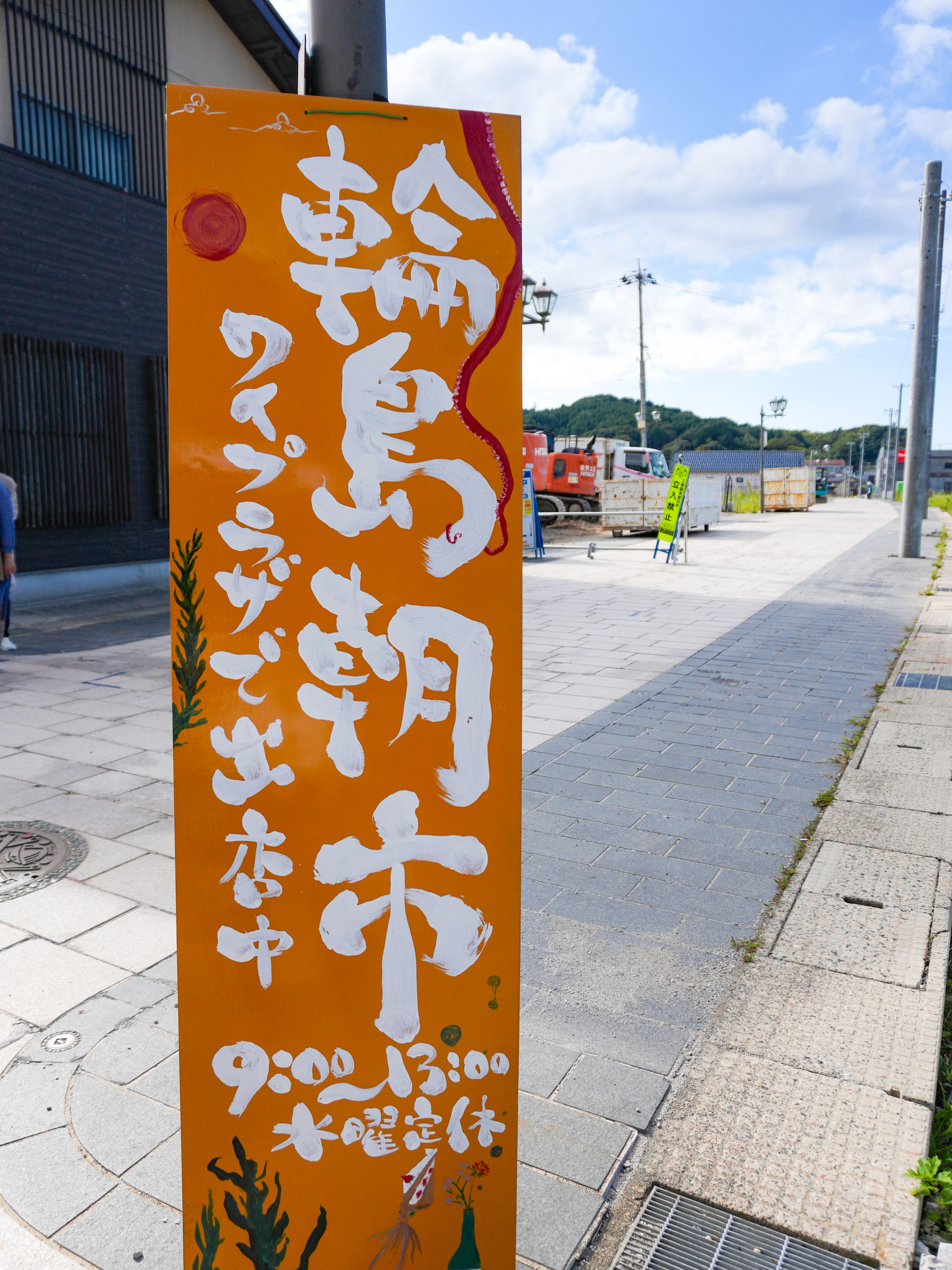
Wajima offers an opportunity to learn about the region’s craft heritage and support the businesses that are gradually starting to welcome visitors.
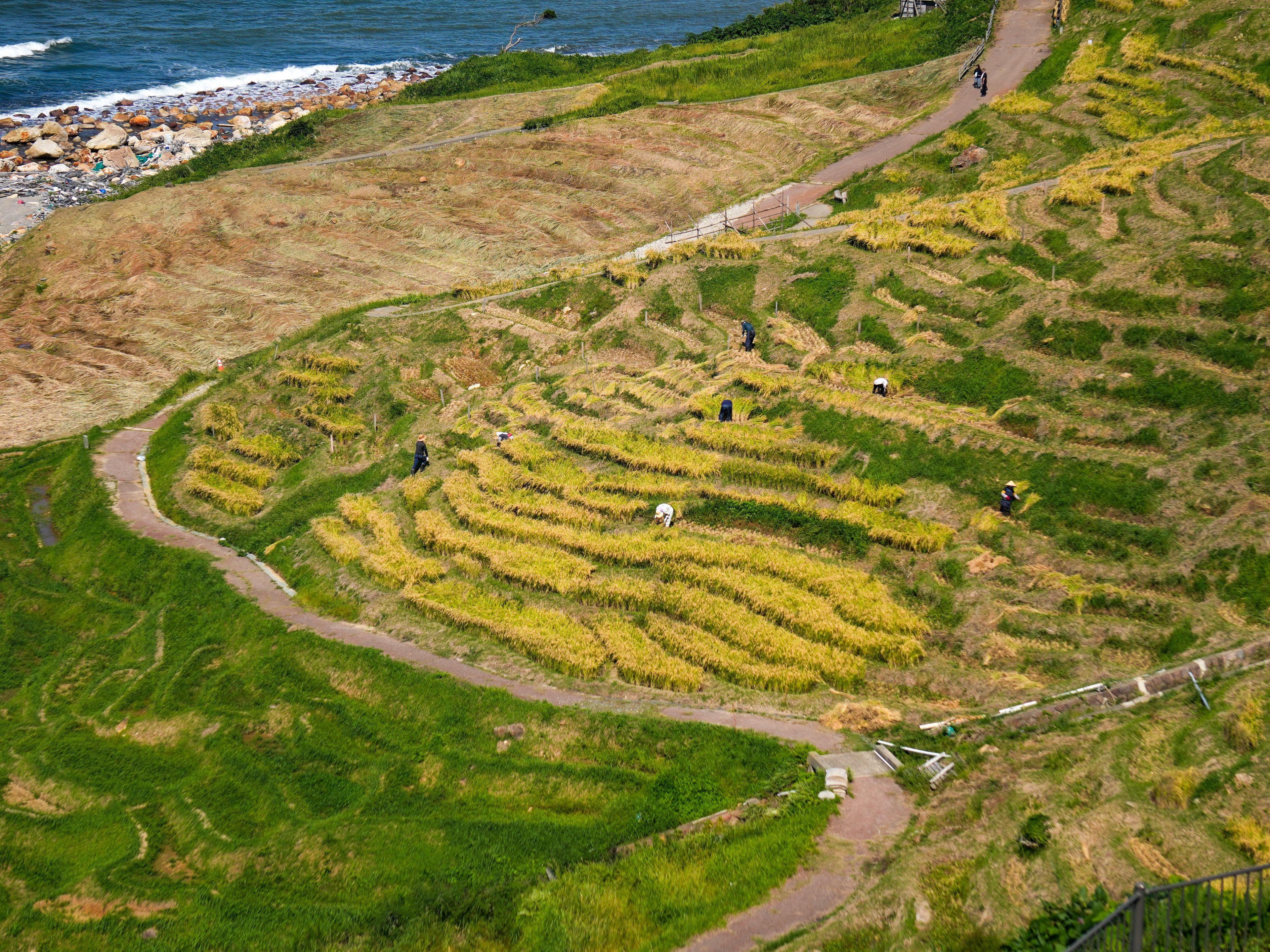
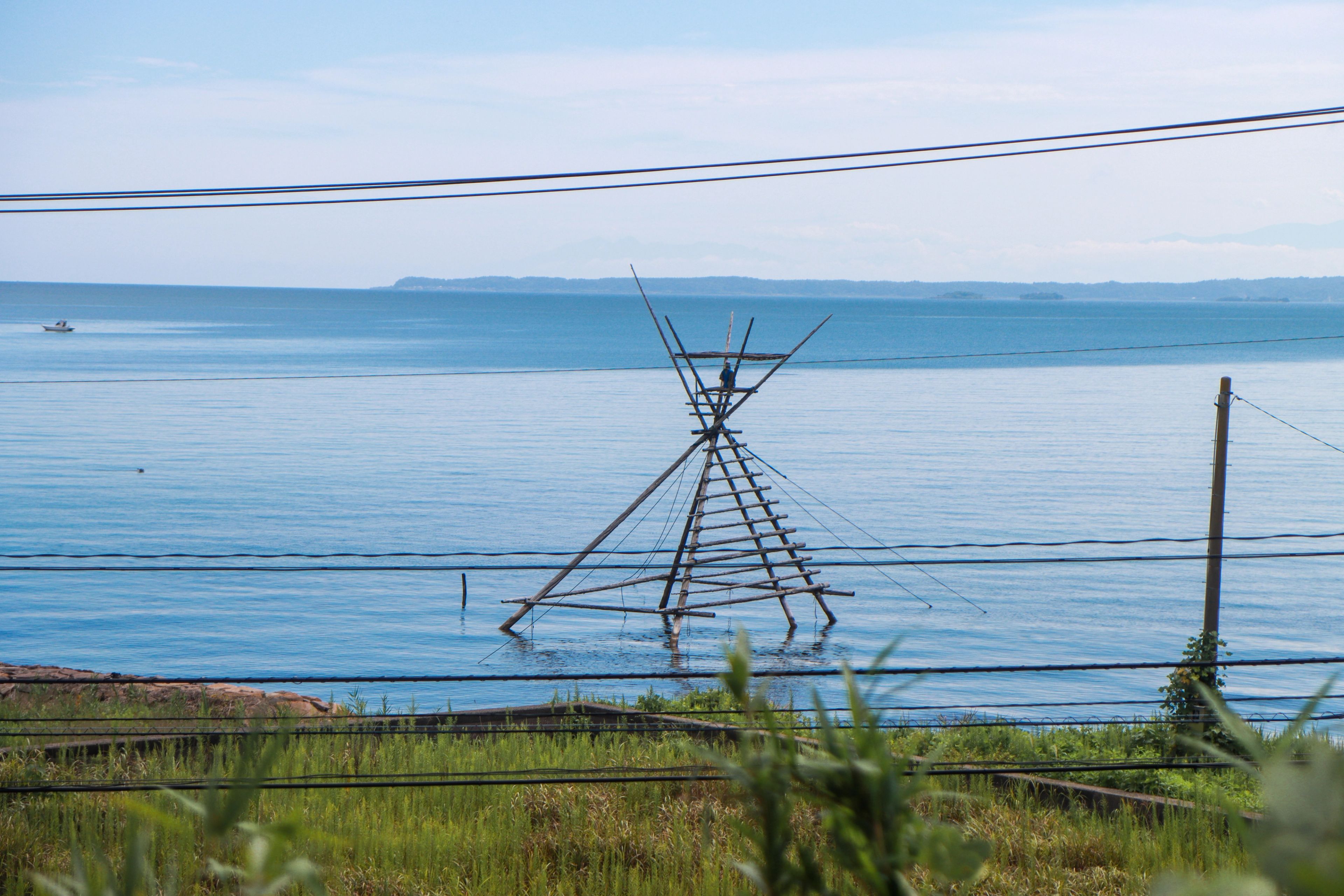
At Senmaida, the terraced rice fields beside the sea introduce another part of Noto’s identity: a landscape shaped by people’s work. There is also a small store selling local goods, another great way to support them.
Wakura Onsen, a hot-spring town, is another place to explore through the businesses that have reopened is a great base for you to stay in when visiting.
You can build a meaningful visit around a few places, allowing time for a meal, a conversation or a purchase from a local business. There is no need to rush through an ambitious sightseeing list.
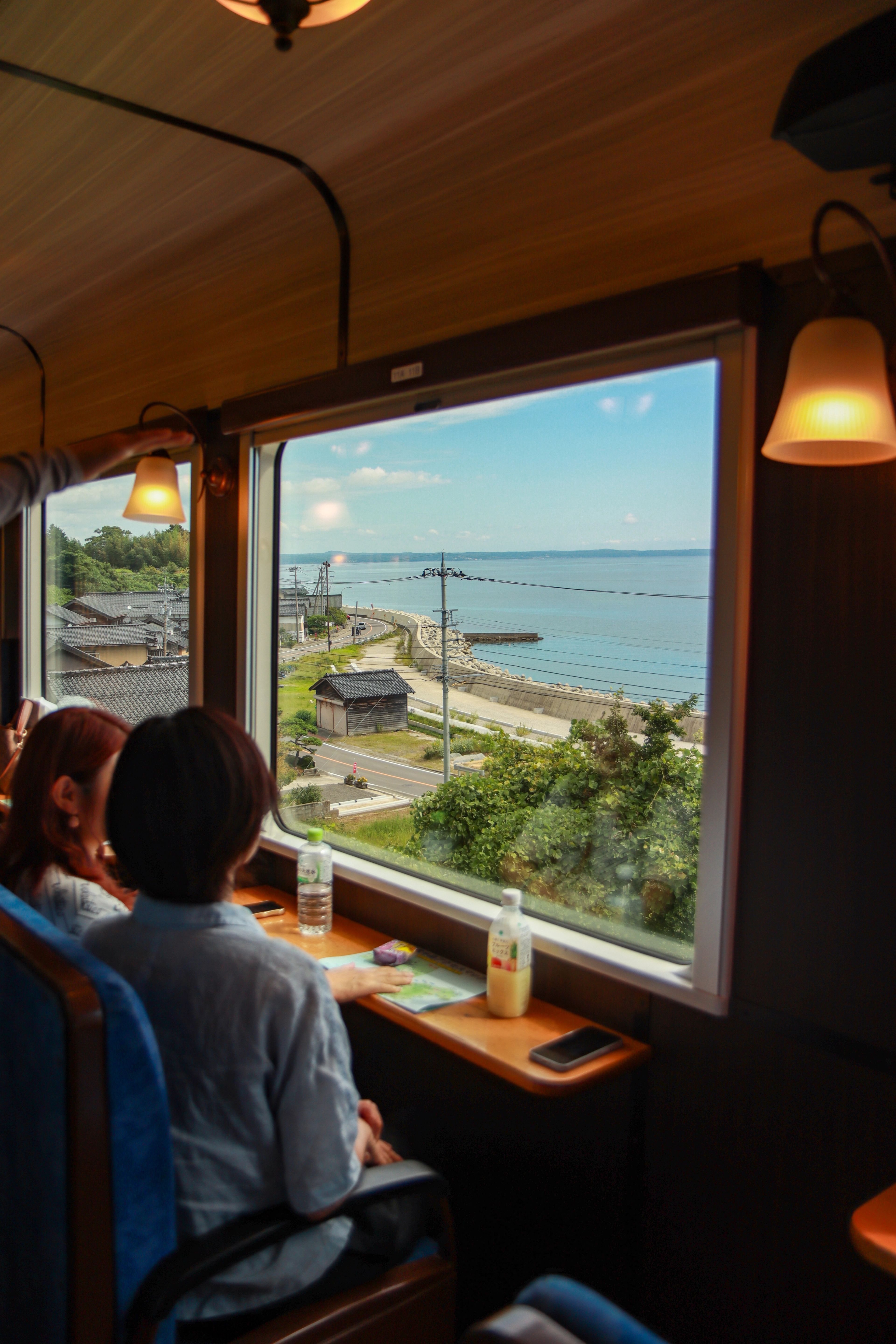
Storyteller train to see Noto's scenery
How can visitors contribute?
This is where I want the people of Noto to have the strongest voice.
The multiple locals I interviewed all said the same thing: please visit. Your presence lets them know that they are not forgotten, and it gives them hope and the strength to keep going.
And when you are there, eat at local restaurants, buy something made or sold locally. Book accommodation that accepts leisure travellers, and consider a locally guided experience. These choices help support the livelihoods that make a community possible.
A visit cannot solve everything Noto is facing. It can, however, bring business to people who are working to continue here, and begin a connection that lasts beyond the trip.
A November journey into Noto’s traditional culture
For travellers interested in a more guided introduction, the next tour, the “Traditional Culture” tour, is scheduled for 21–22 November 2026.
The theme offers an opportunity to explore Noto through the traditions and people that give it its identity. Before booking, check the organiser’s confirmed programme, departure options and language support to see whether it suits your trip.
You can find the tour information at noto-travel.com.
If you care about Japan’s countryside and traditional culture, I hope you will consider Noto when planning a future journey. Come with curiosity, allow time to listen, and spend time with the people welcoming you.
PR / Sponsored Content Disclosure
This article was created in collaboration with Tobu Top Tours as part of a sponsored visit to Noto, Ishikawa. All experiences and opinions shared are my own.